A project funded by ADEC Reward for Research Excellence. Diabetes is a chronic disease effecting a wide population of people, continuous monitoring of glucose levels is required to prevent serious complications. However, traditional means such as finger-pricking are painful, and are only performed periodically. To improve the quality of life for diabetic patients and the accuracy of the traditional monitoring methods, implementation of a continuous glucose monitoring (CGM) system is necessary. Previous designs were discussed in literature; however, longevity of the implants remains as a serious challenge due to bio-incompatibilities risking the life of the patient. What we proposed is the design of one of the world’s smallest subcutaneous System-on-chip (SoC) for CGM, fully integrating the antennas, electrodes, and all circuitry on a single-chip. The chip is encapsulated by a novel and an unreported multilayer biocompatible coating, eliminating serious bio-incompatibility issues with the goal of achieving an implant that survives for years without replacement.
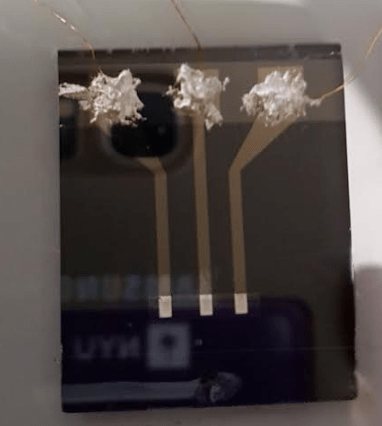
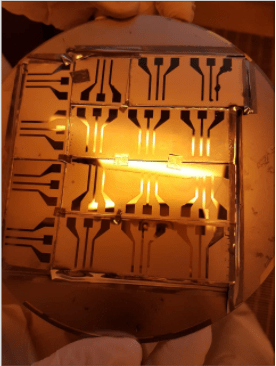
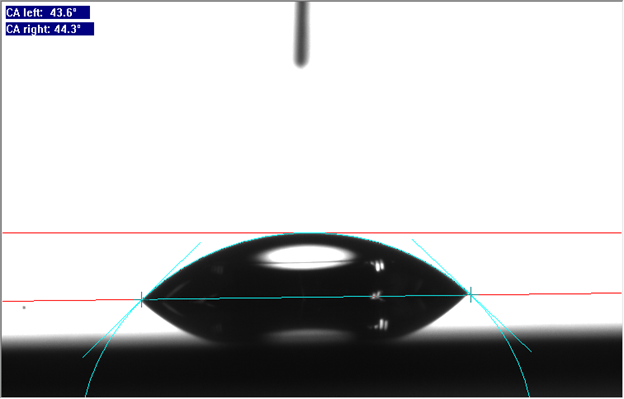
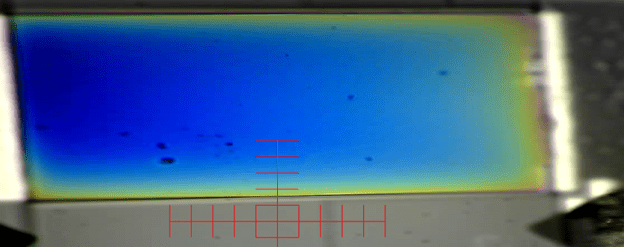
As a Research Assistant, my role involved fabricating electrodes in a clean room using E-beam evaporation, and UV lithography. I was part of a team that helped develop the recipe to achieve optimal Platinum and Gold electrode structures. I fabricated different sets of electrodes and applied different coatings to achieve biocompatibility using chemical methods such as Atomic Transfer Radical Polymerization (ATRP). Later I developed a recipe use electroplating to sense glucose and other ions to be tested in vivo conditions. The structures were studied using different techniques such as SEM and Raman microscopy.
 Thaer Alafghani